California Academy of Science
Color of Life
Living Color
Color of Life shows the many ways in which color communicates, sends signals between living organisms, and serves as a lens that reveals the inner workings of our world.
With eight live animal habitats, forty specimen cases, and a dozen interactives, this exhibition offers surprising discoveries and unanswered mysteries about what shapes the colors we see in nature.
The exhibition design features luminous color fields that accent a clean background palette of reconfigured modular exhibit pieces, and the lush, saturated imagery of flora and fauna take center stage.
Location: San Francisco, CA
Project Size: 8,000sf
Start Date: 2013, Opening: 2015 (ongoing)
Role: Lead Exhibit Designer
Process Highlights:
• With 18 months from concept to opening, the project required a design-build structure
• Rapid prototype development, specimen selection, and modelmaking oversight
• Extensive back-of-house design and coordination for live animal care
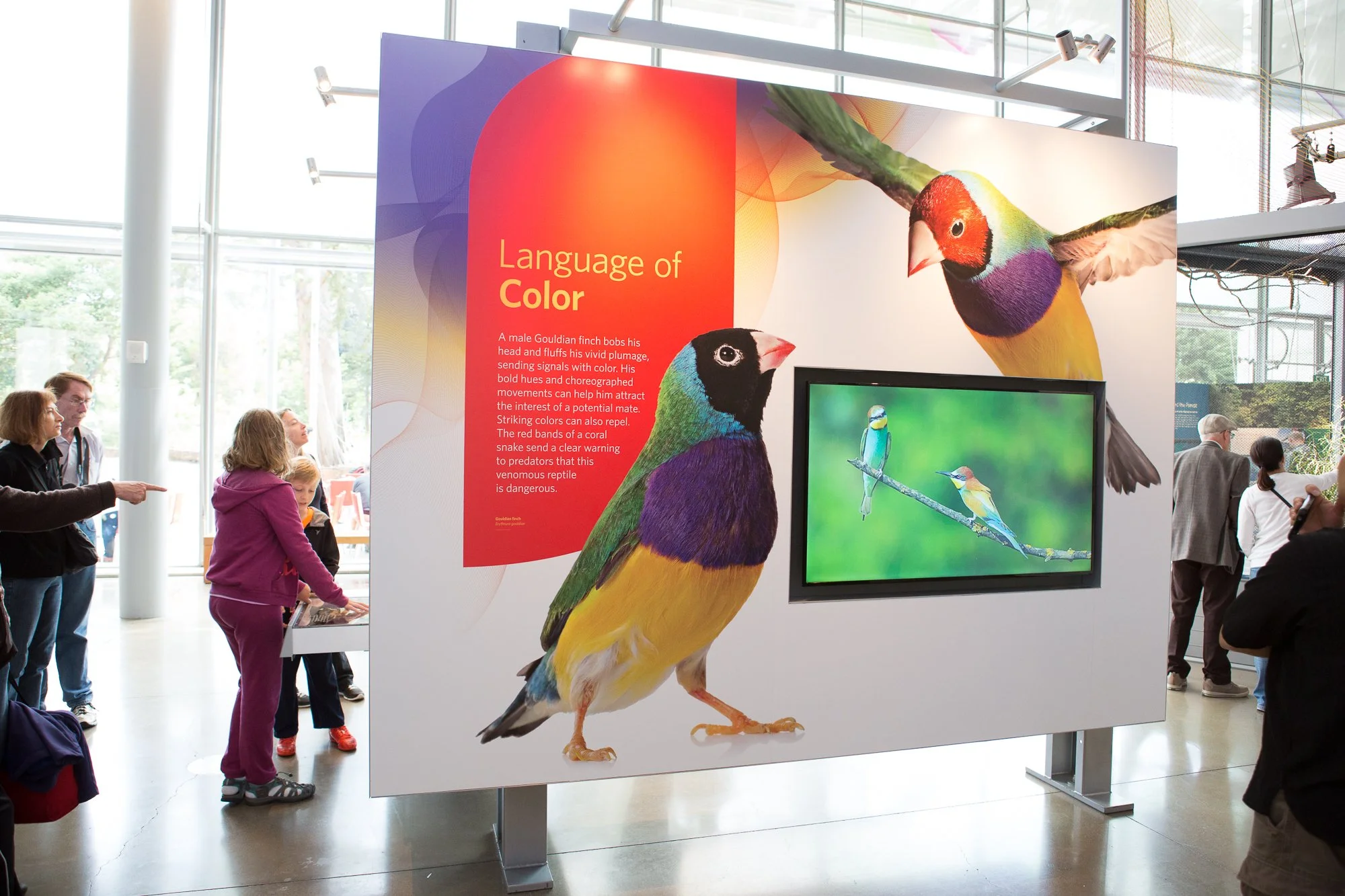
See color for what it truly is: a major player in the natural world. From mating rituals to survival tactics, color plays a crucial part in the day-to-day life of countless species, and reveals the interconnectedness of life.
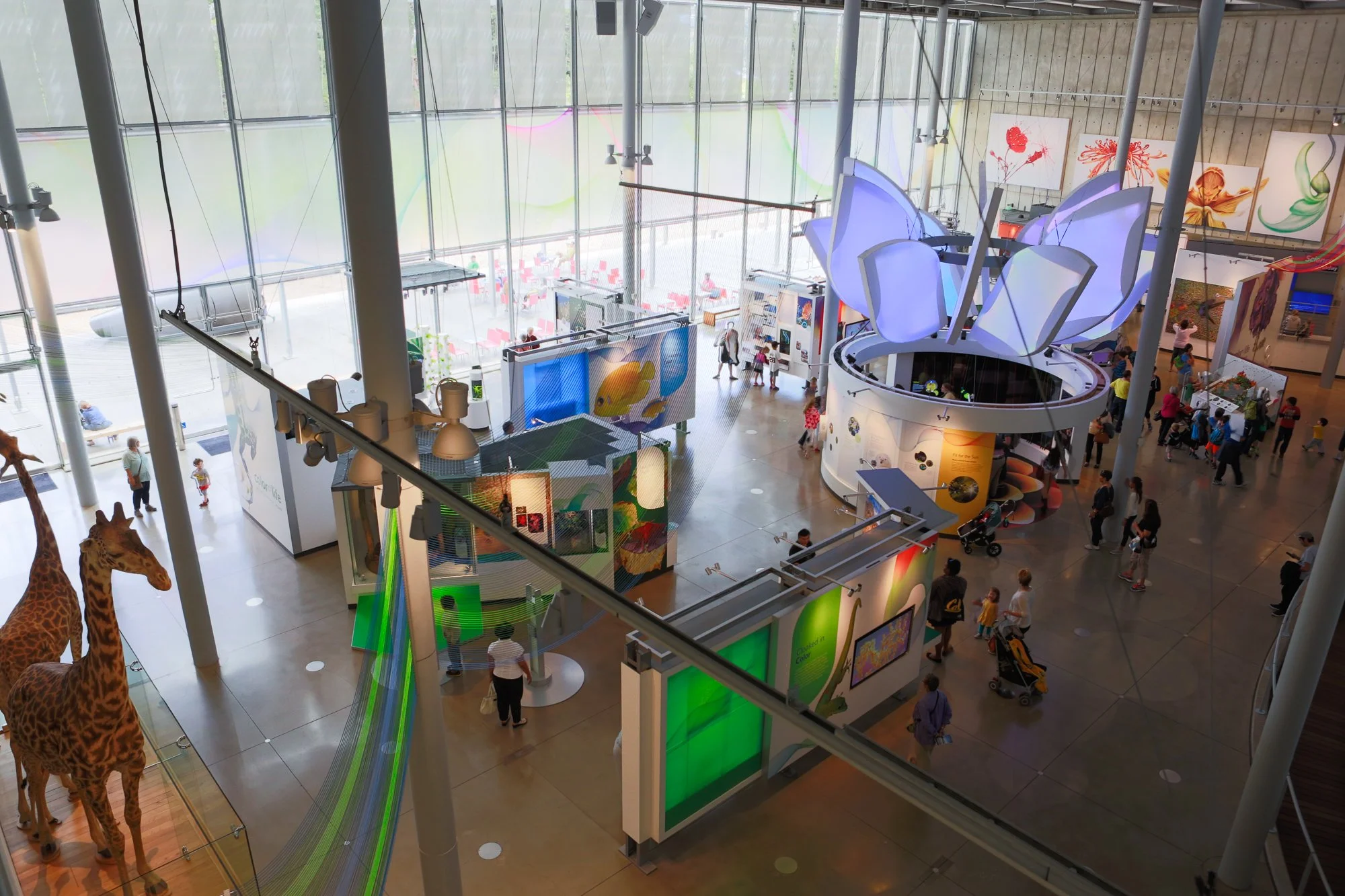
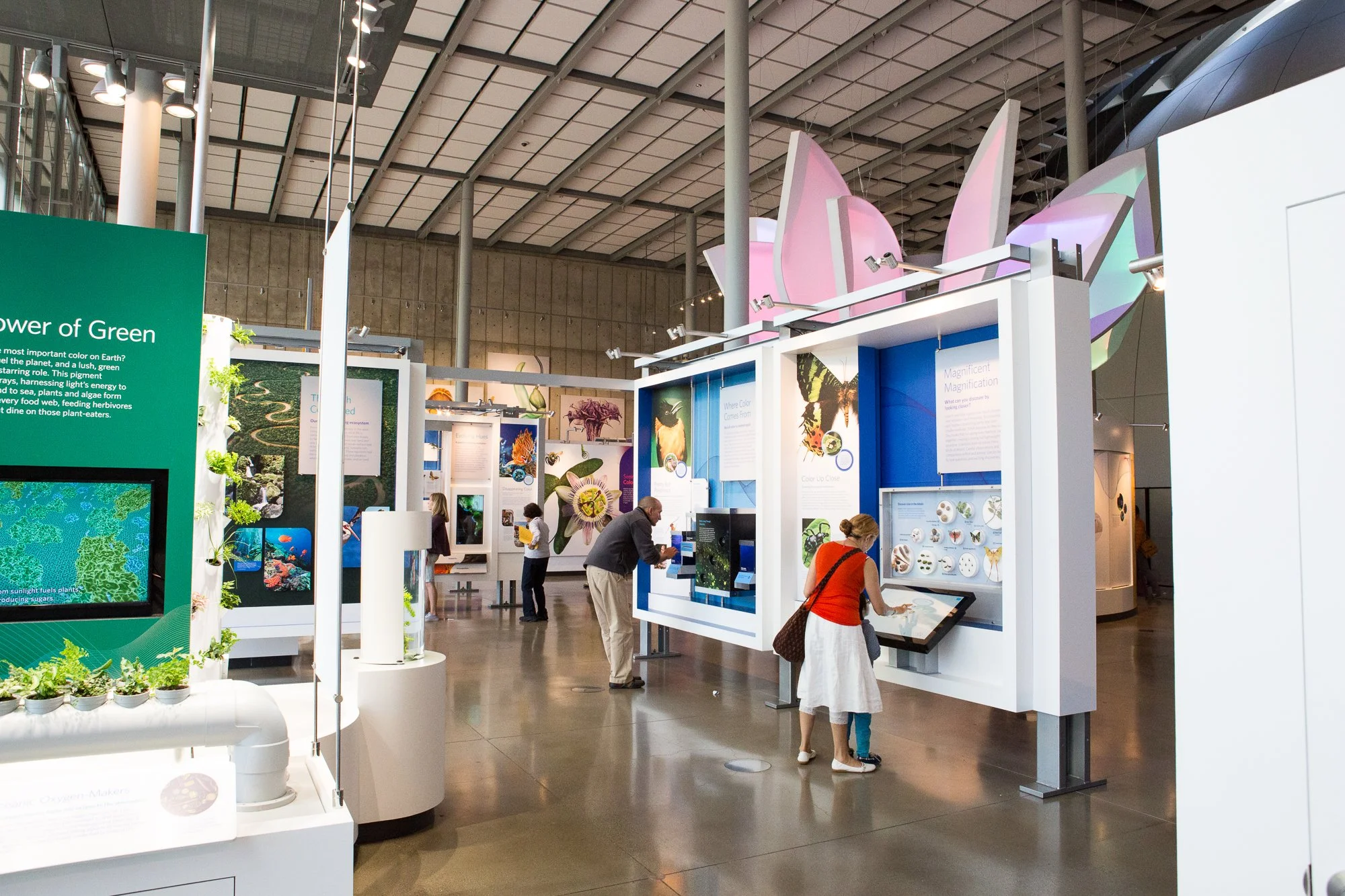
The open-plan layout reuses an existing modular system arranged around a series of new live animal tanks and enclosures. A central experience provides a hub from which to explore.
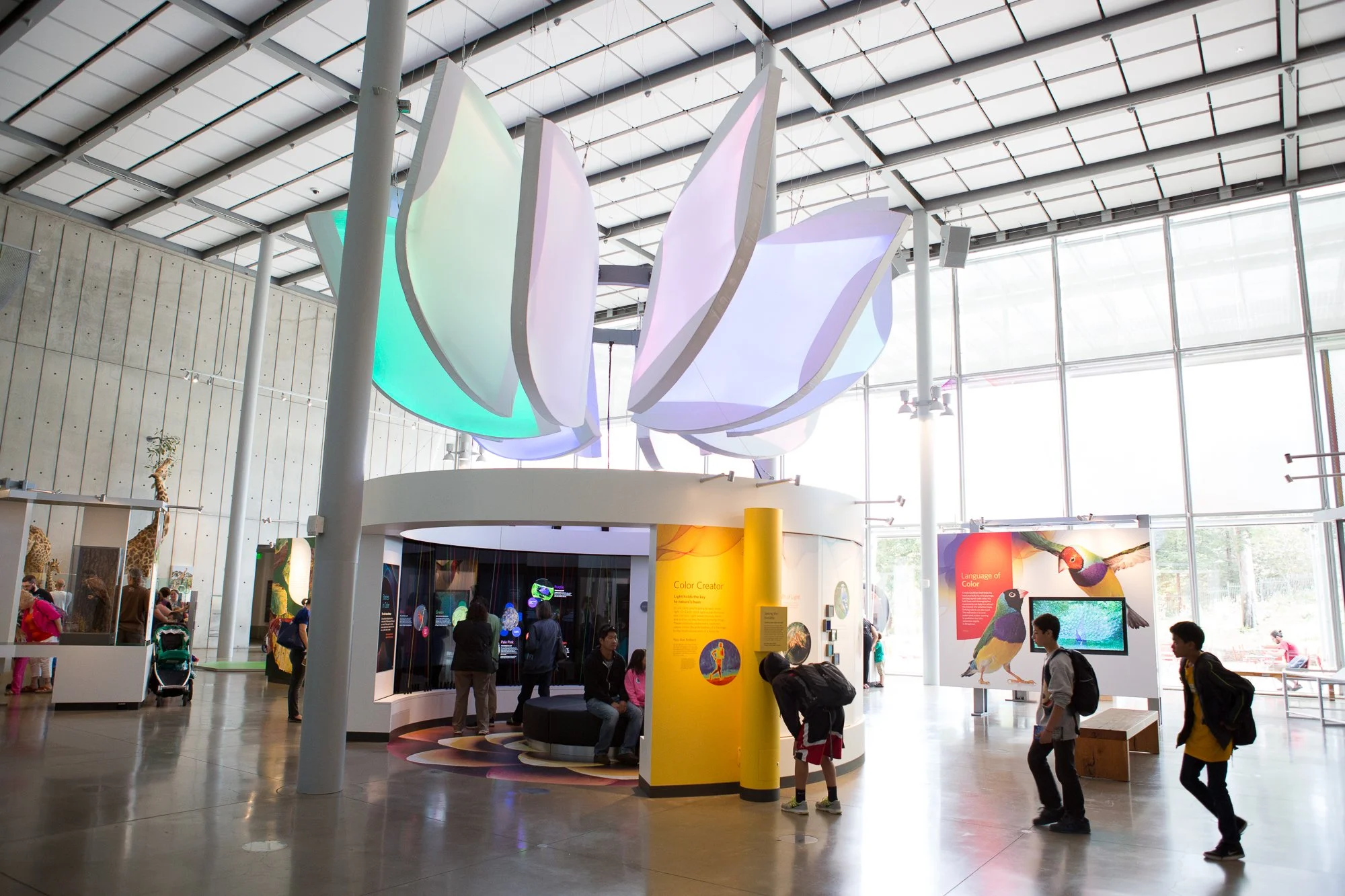
The central Color Visualizer area is a multi-sensory experience and gathering space.
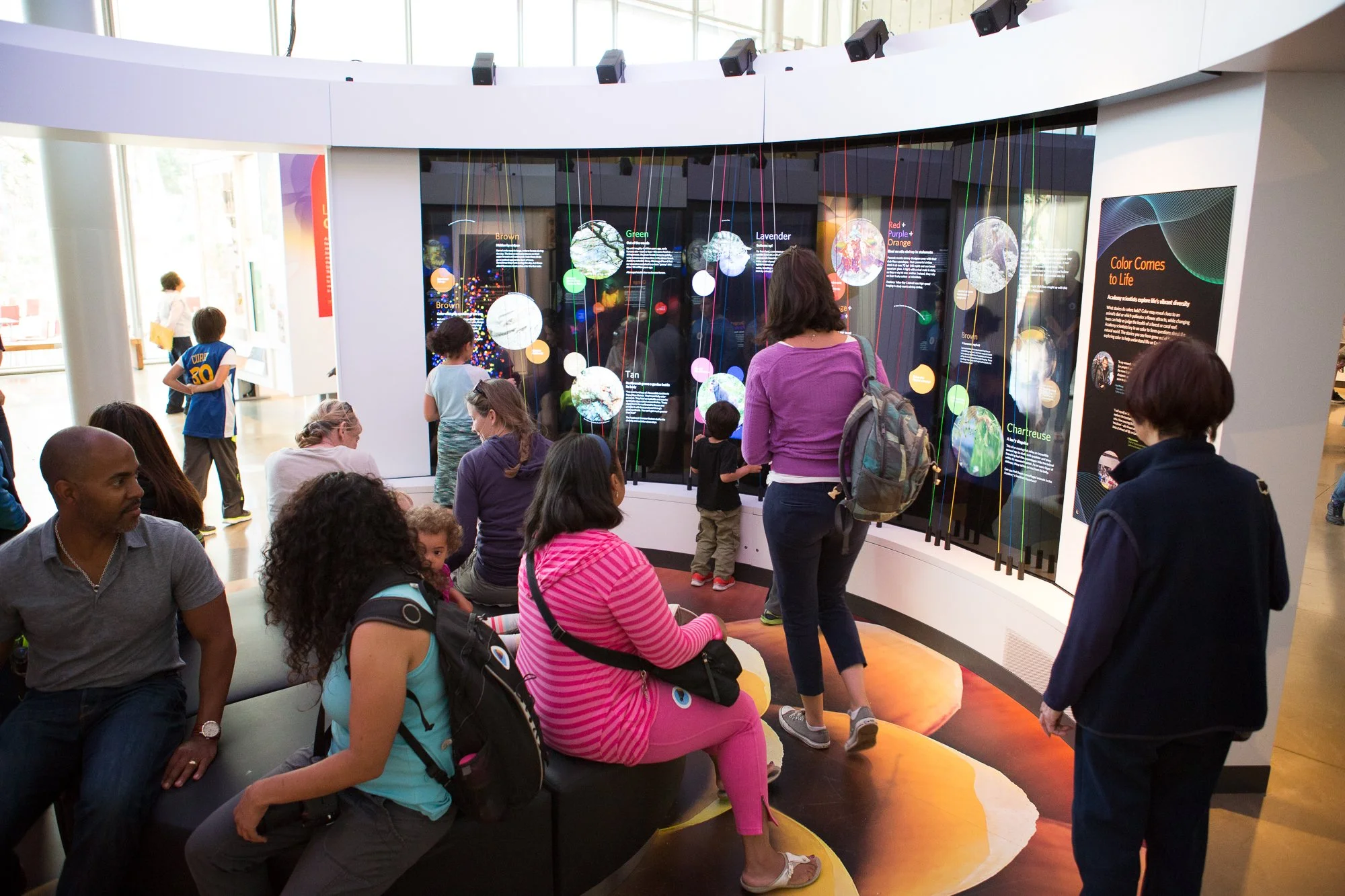
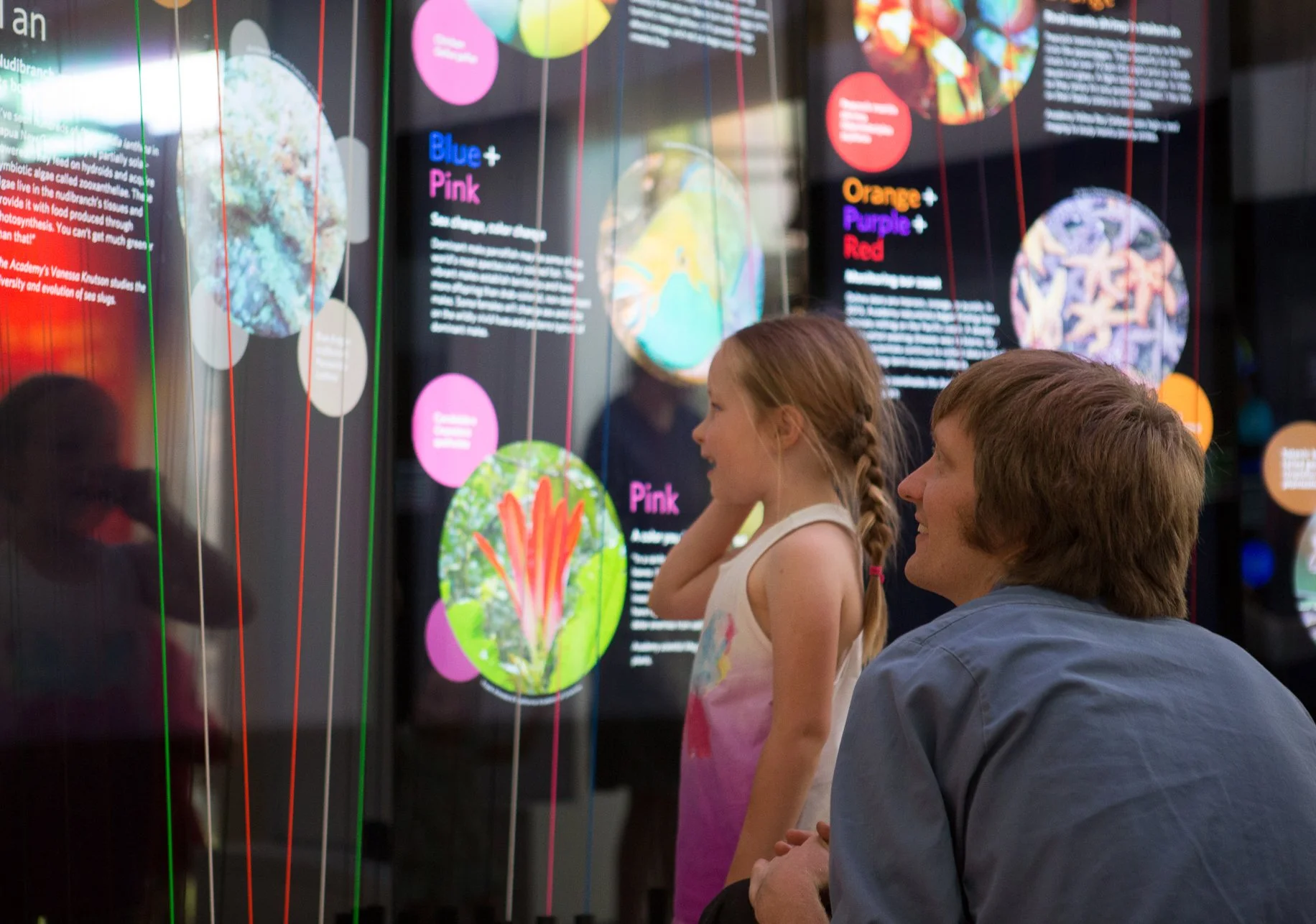
Visitors select and mix colors by plucking strings, discovering surprising stories about how color communicates within and between species.
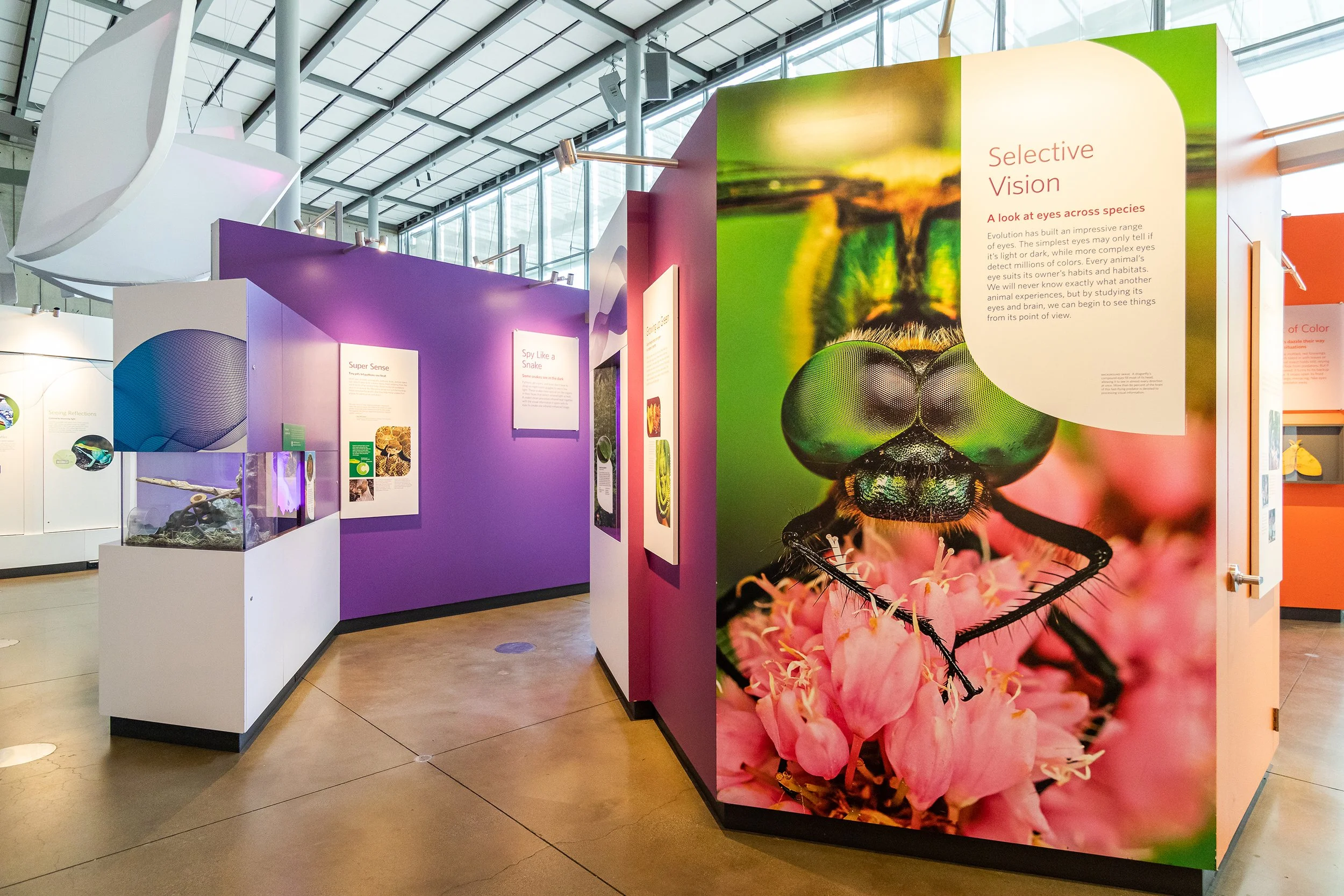
Vibrant, large-scale prints of flora and fauna provide the bursts of color in the exhibits.
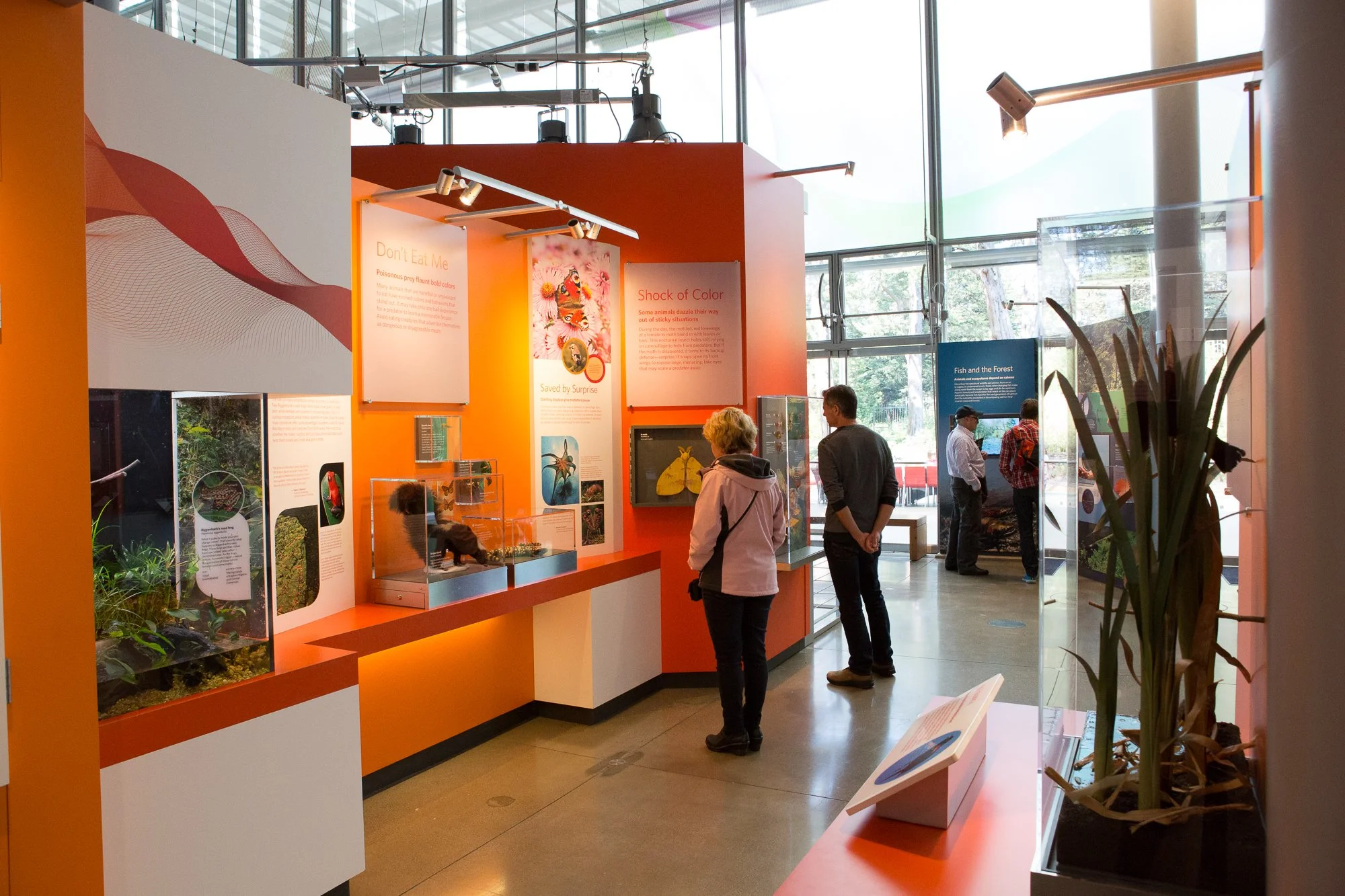
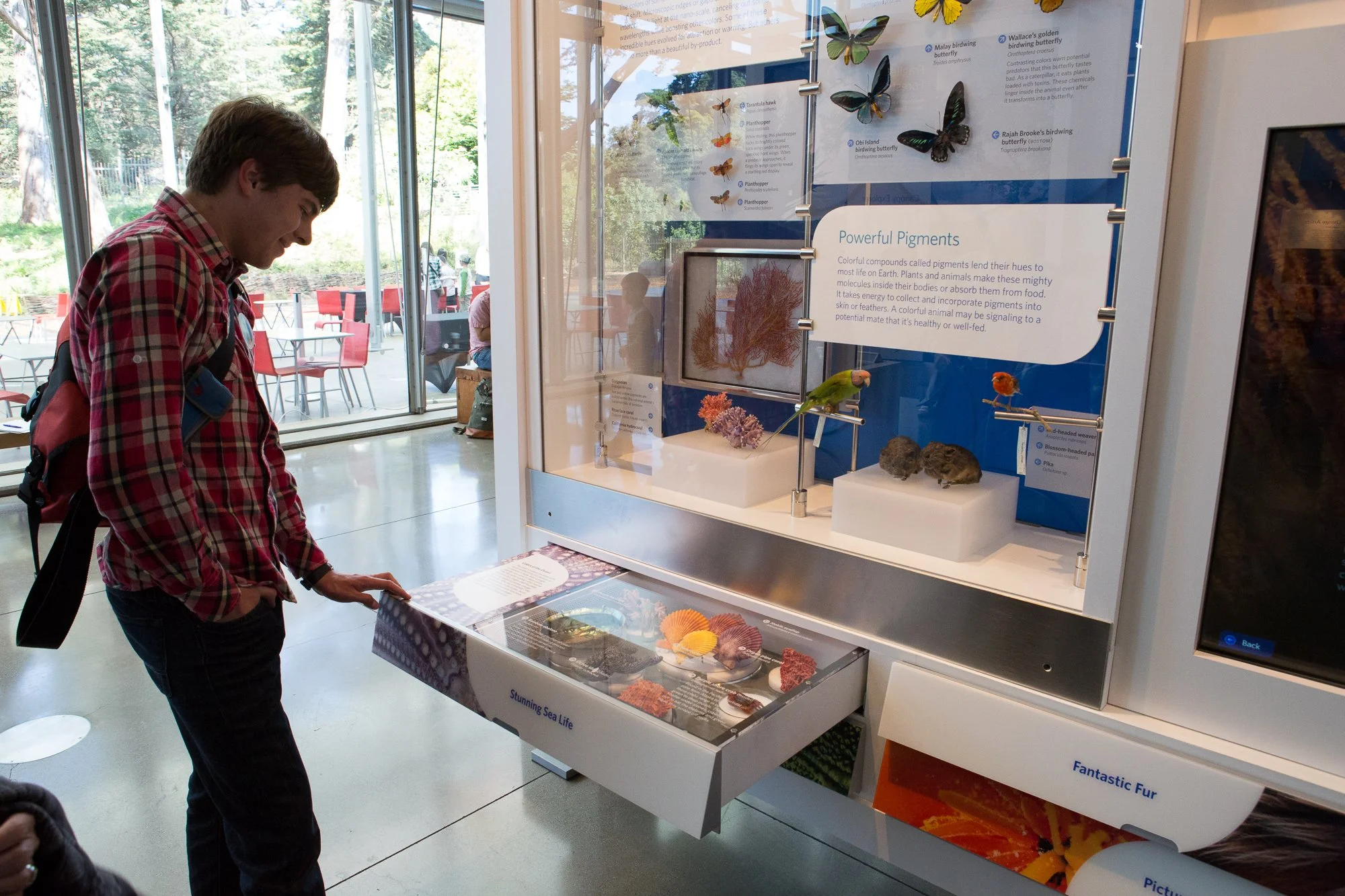
Each main exhibit area includes live plants and animals, specimen, models, and interactive experiences.
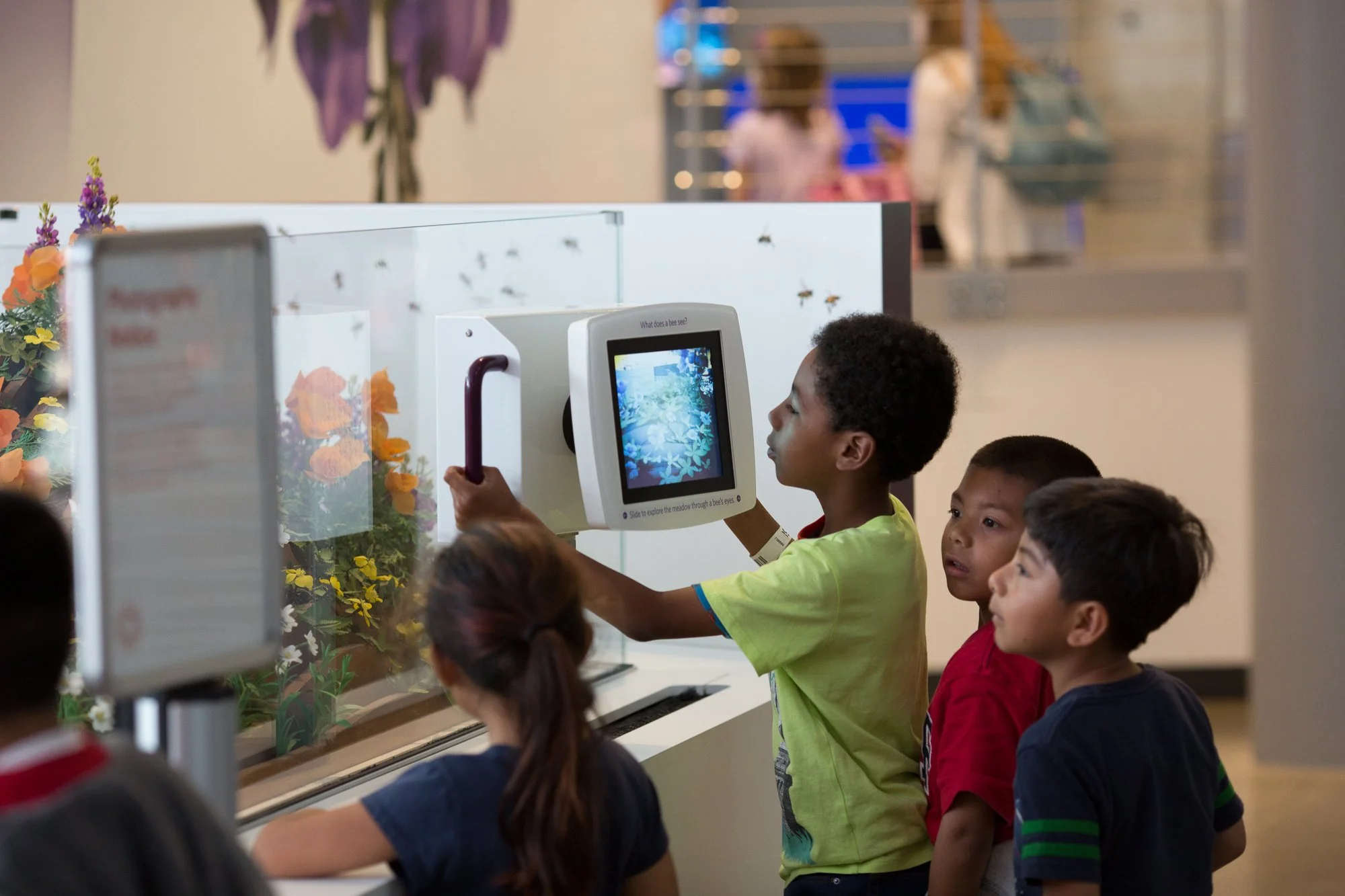
Visitors slide augmented viewers to navigate a meadow of flowering plants with a bee’s-eye view.
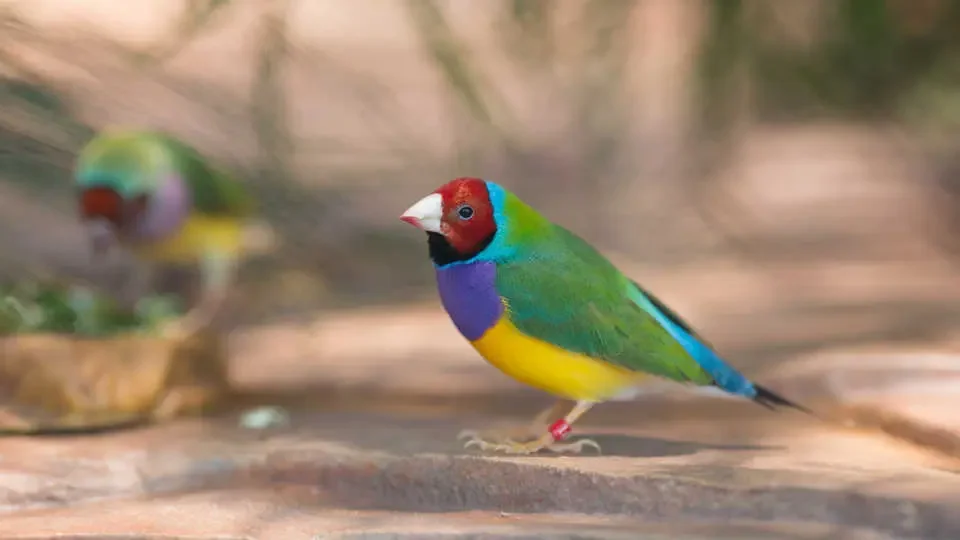
The Color Communicates area includes an aviary with polymorphic Gouldian finches.
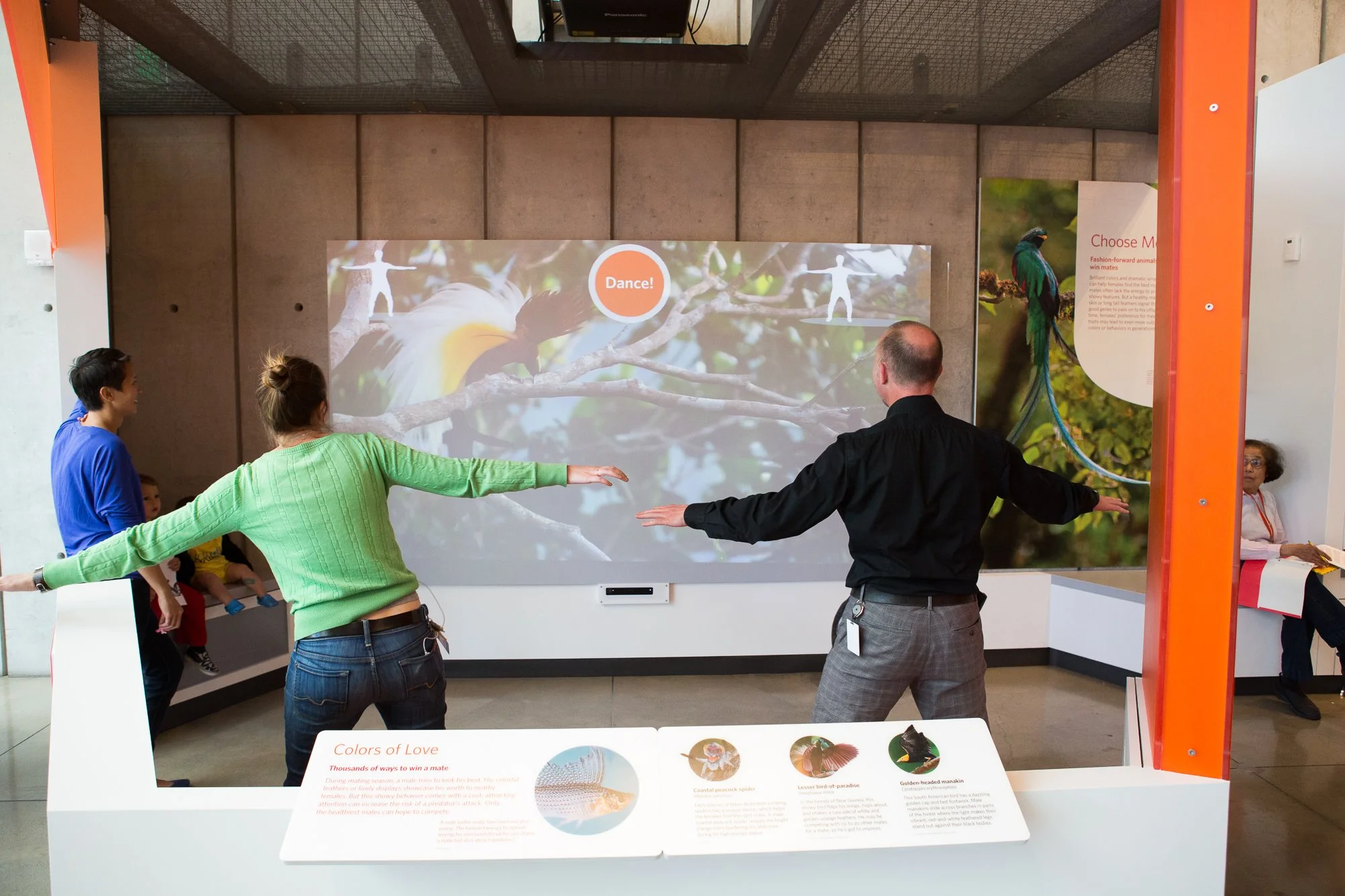
Visitors mimic the mating choreography of birds, seahorses, and spiders in this full-body interactive.
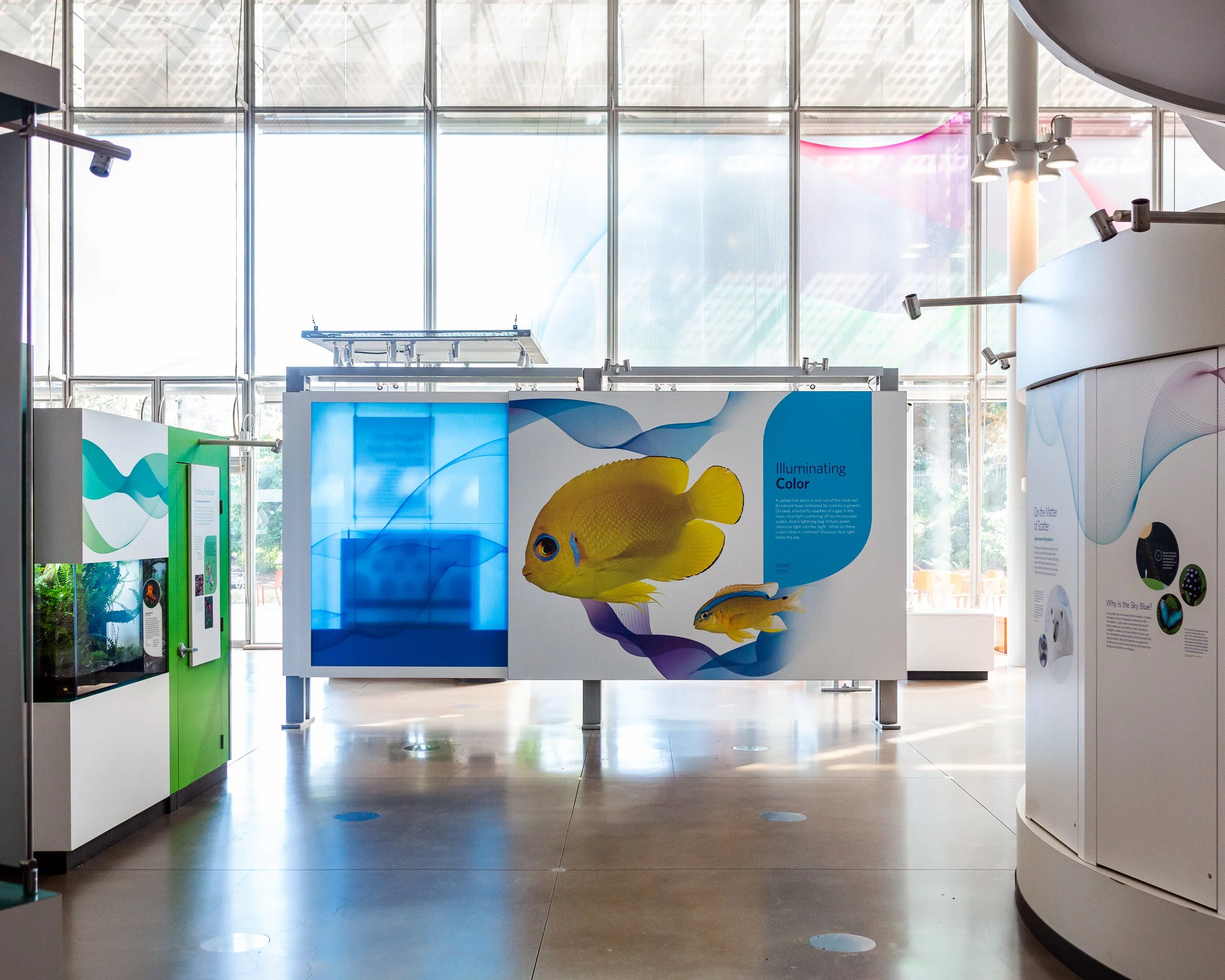
Where do the colors we see come from? This area explores the sources of color: biological pigments, brilliant hues created by microscopic structures, and chemically generated colors of bioluminescence and fluorescence.
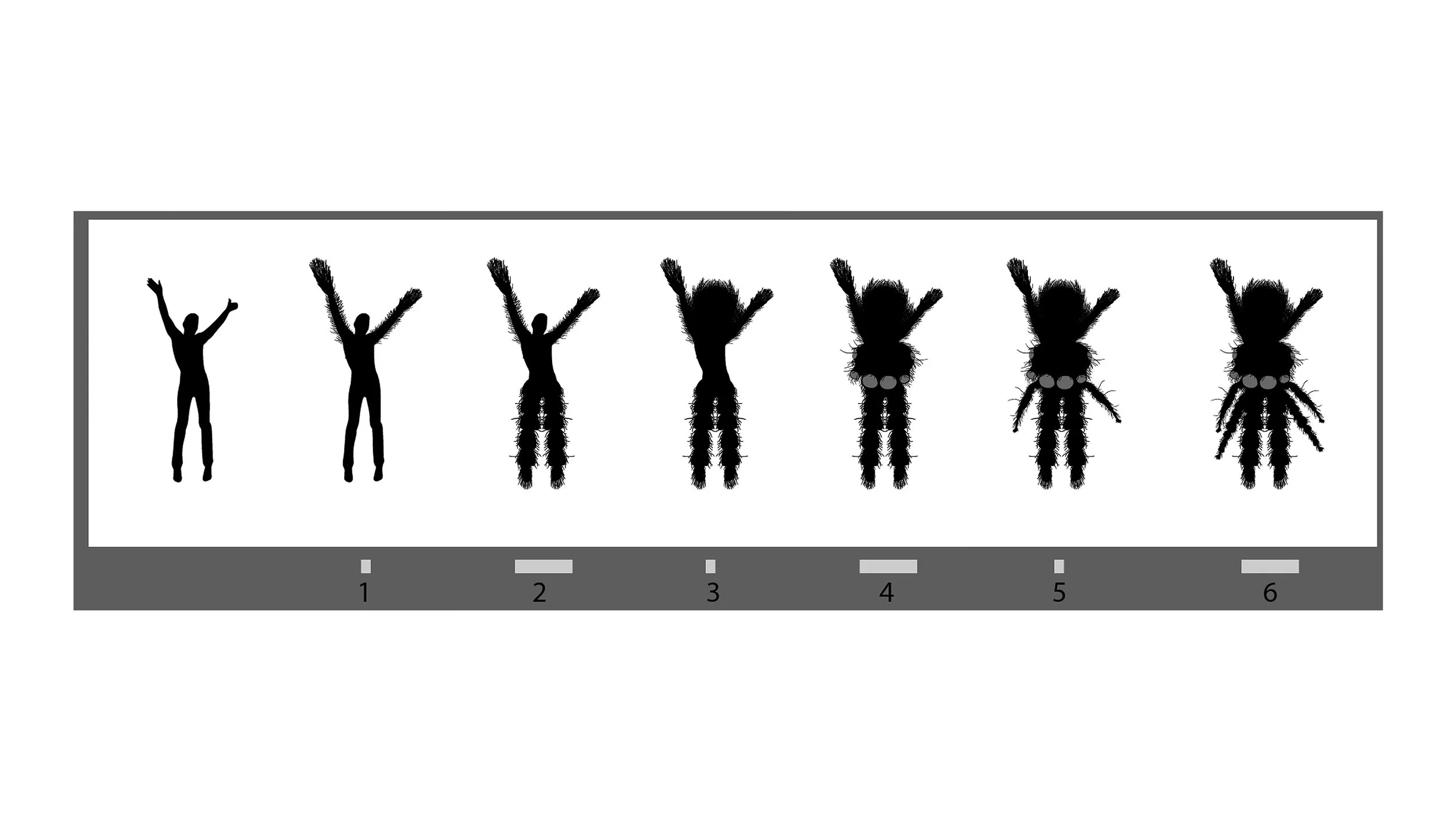
If the visitor strikes the right poses, they will morph into the animal's form. Many tests and iterations of game play and instructions were part of the design process.
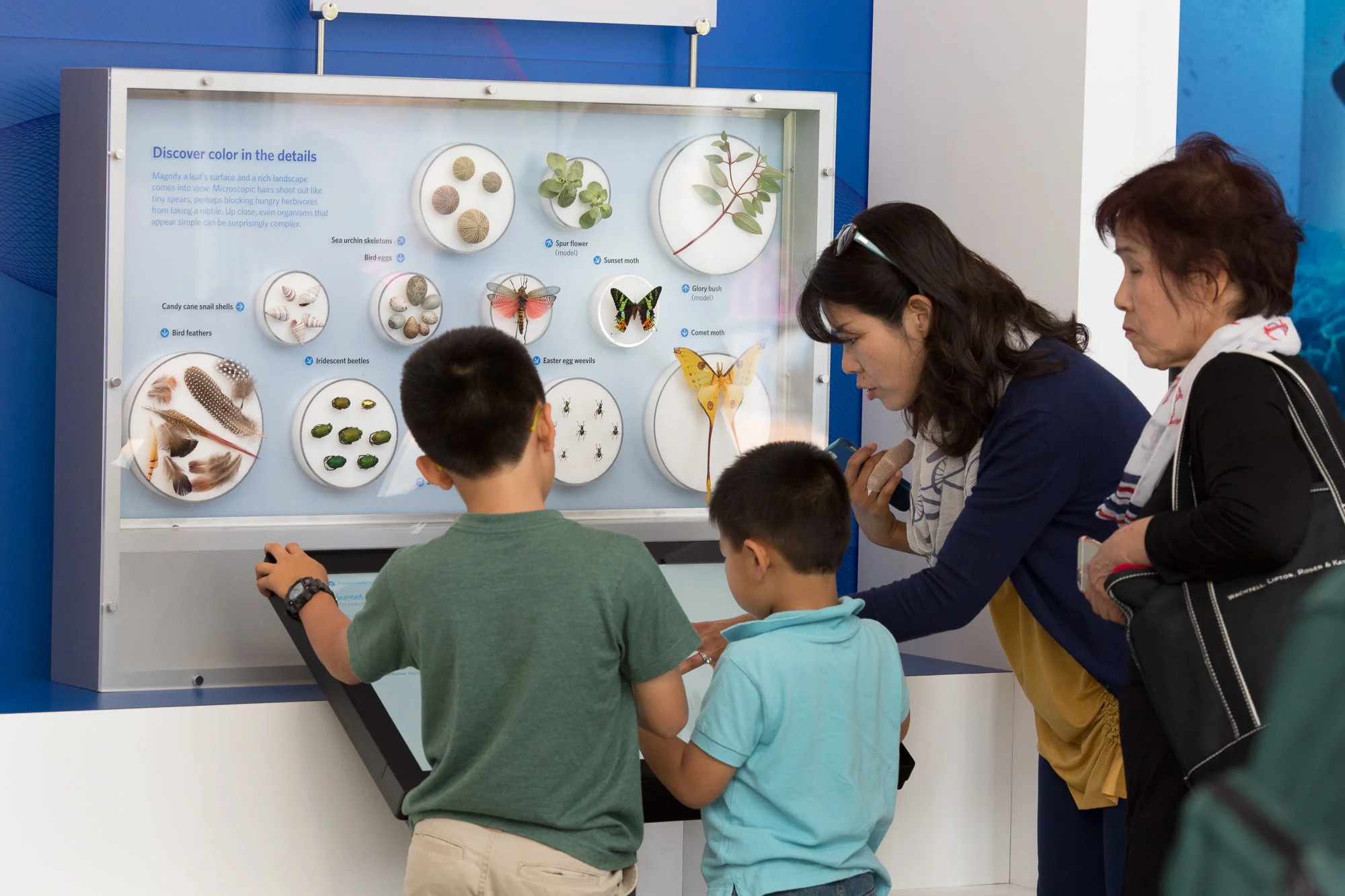
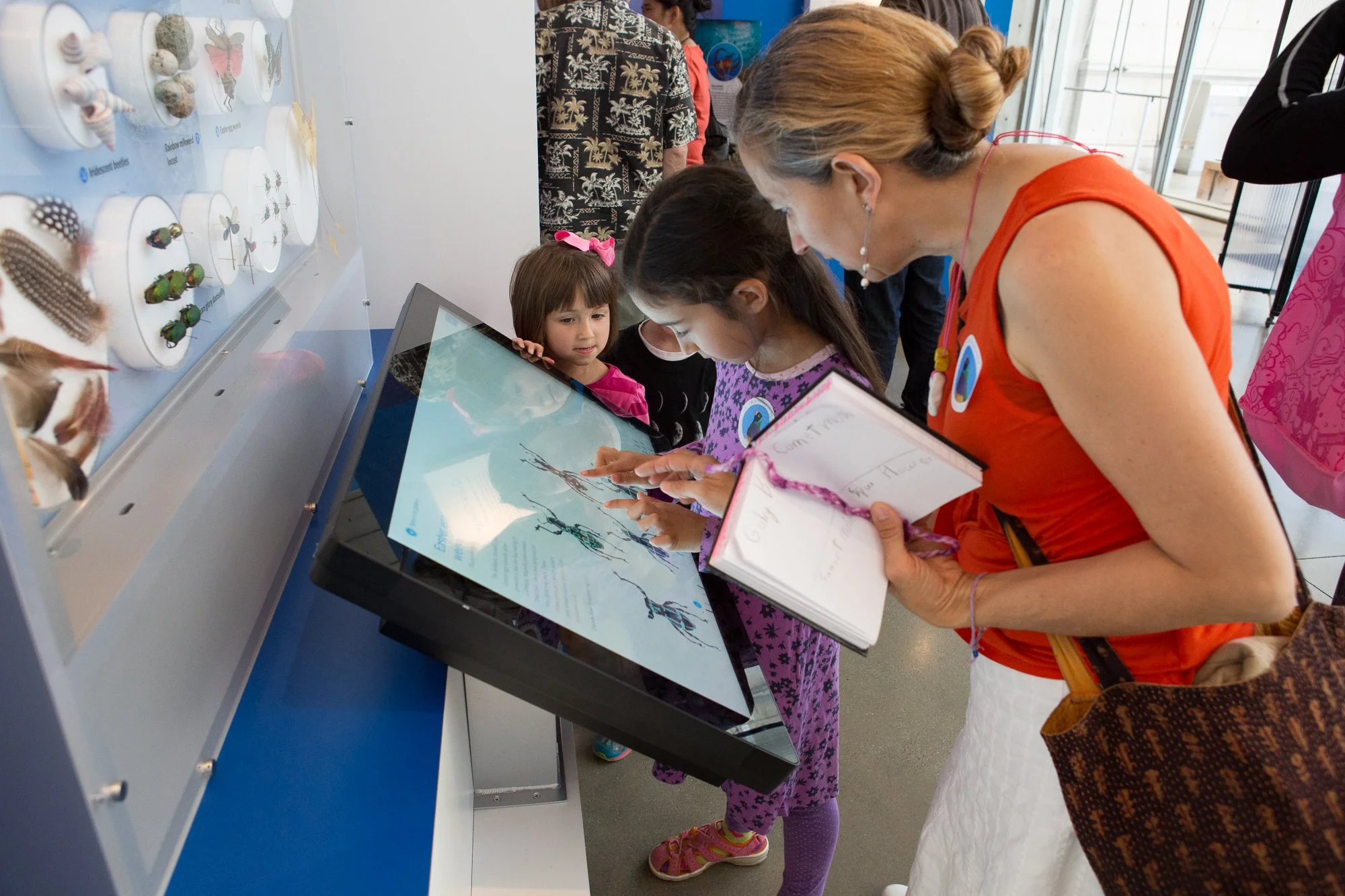
By using Gigamacro™ and collections specimen, the team created detailed, high-resolution views of butterfly scales, leaf textures, and bird feathers to enhance the specimen display.
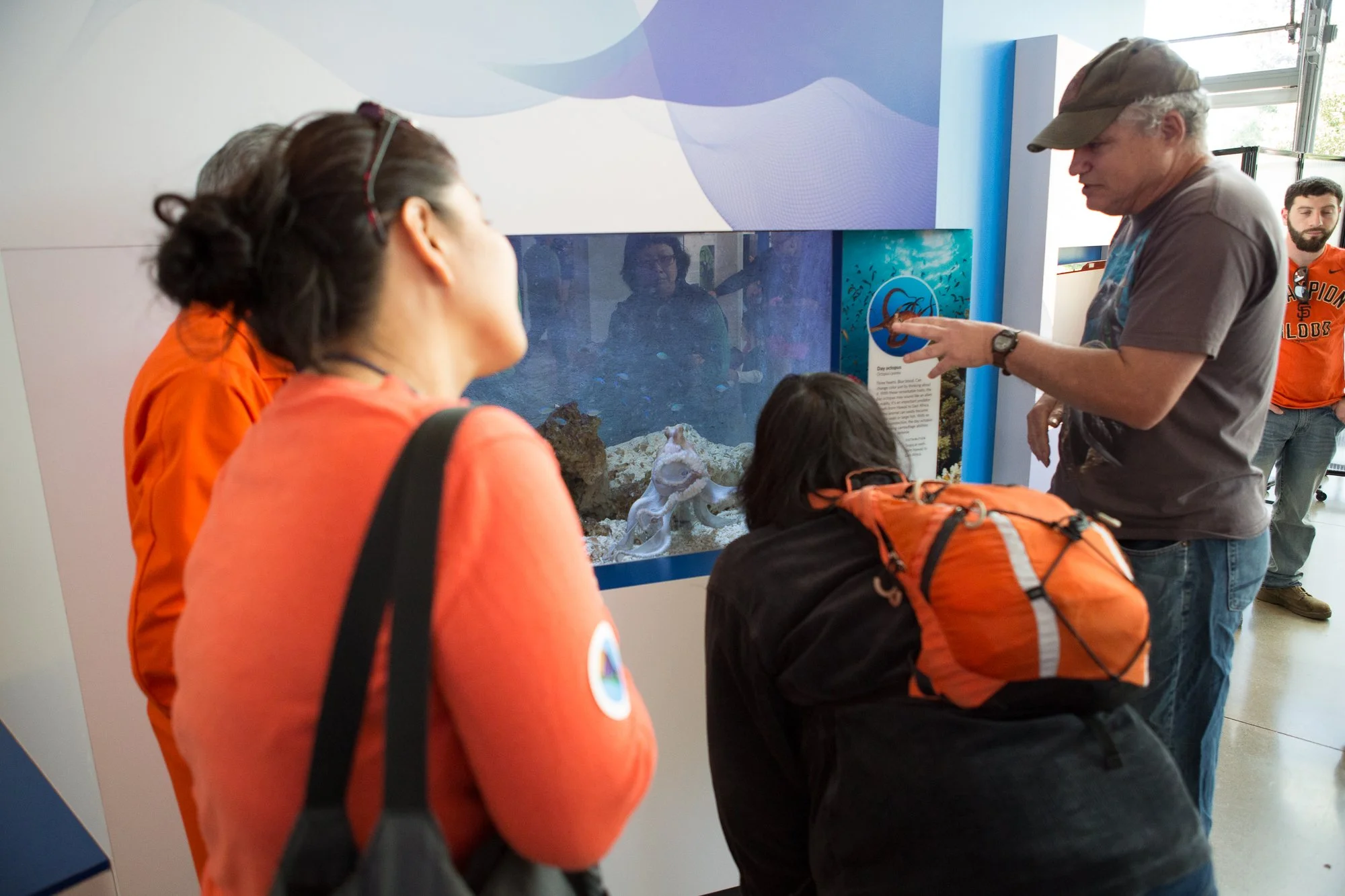
Color-changing chromatophores in action.
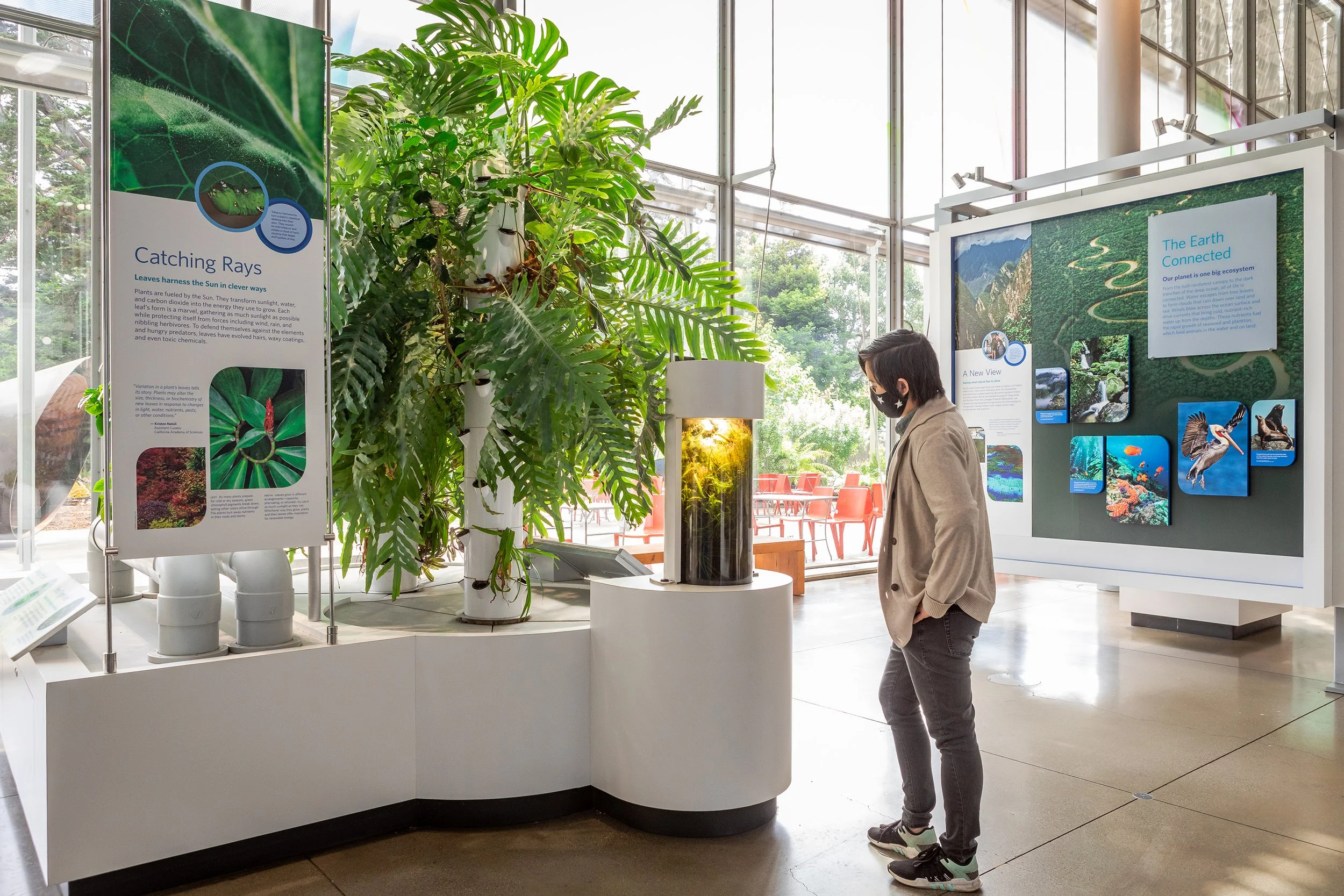
Chlorophyll—one of the most important energy-fixing colors in our natural systems.
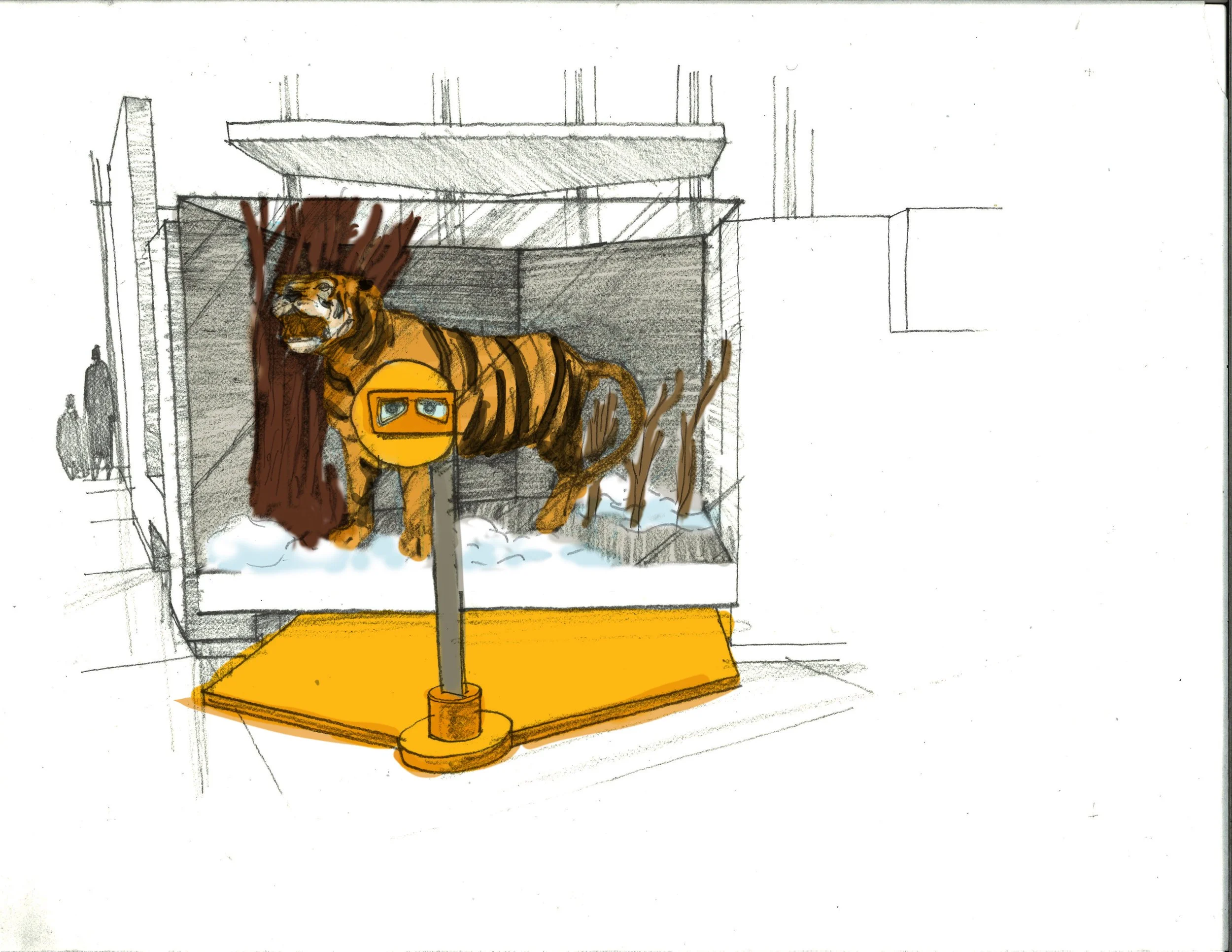
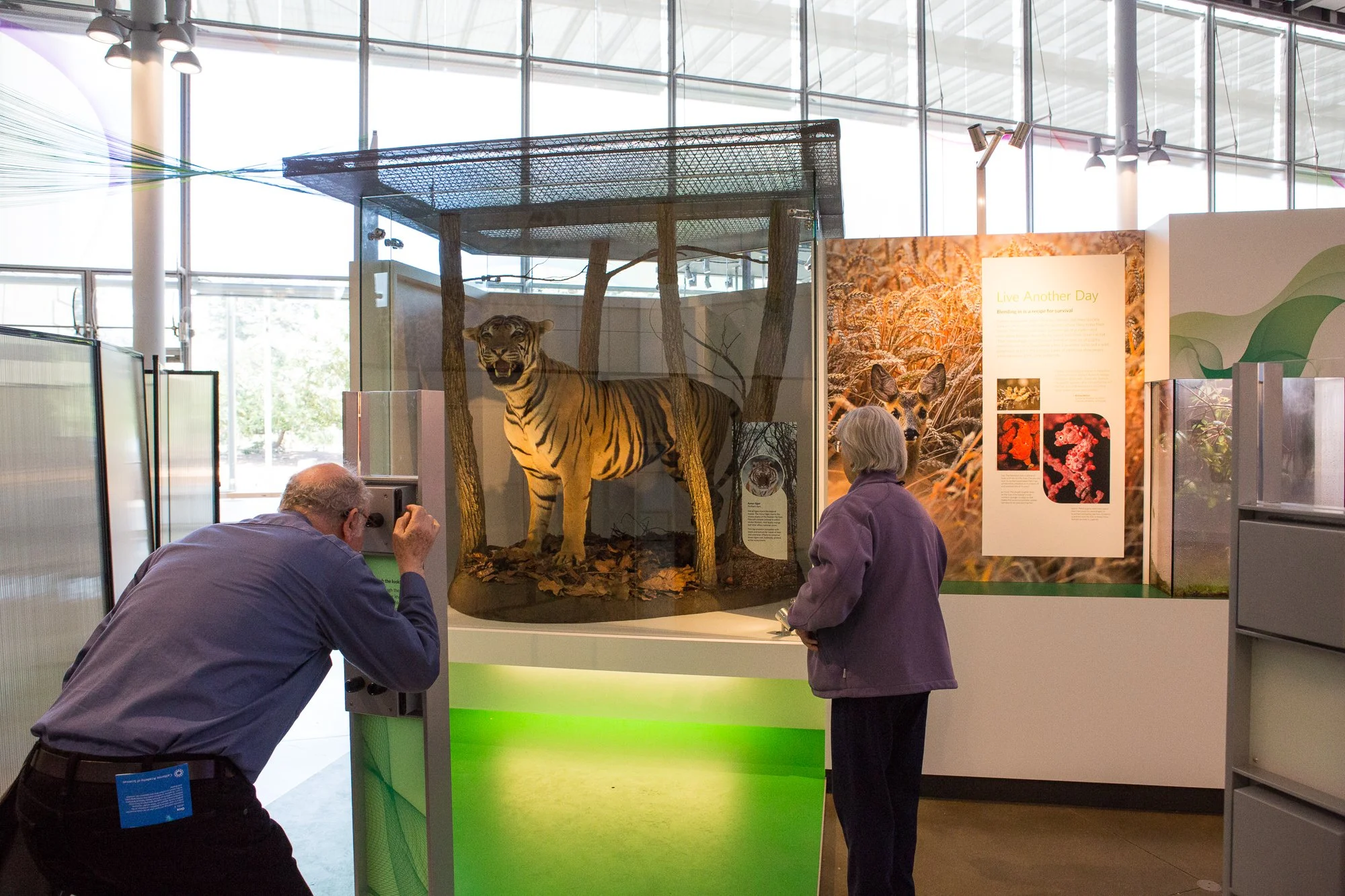
An artist sketch of the tiger display and interactive viewer in the Color Conceals area.